

I once asked my father, a mathematician, what he thought about in his quiet time. “Triangles,” he said. I’m fond of three-sided shapes, but when I’m alone I think about parts and the whole. It’s the most interesting subject I know, both for how much we understand and for how little.
A small exercise. Everything, including you, is part of something larger. The only exception is the universe, and even that is debatable. Start nesting: human, mammal, animal, living thing. Then the memberships. Some we’re born into, like a family or a continent. Others we choose or earn or simply declare: writer, musician, husband, Democrat. Somewhere in that pile of given and claimed belongings is a self.
We know this matters, because it’s what we teach children first. Russian dolls. Animal figurines sorted by kind. The poster of the tree of life on the classroom wall. All of it is an early answer two questions: “who am I? and “where do I come from?”
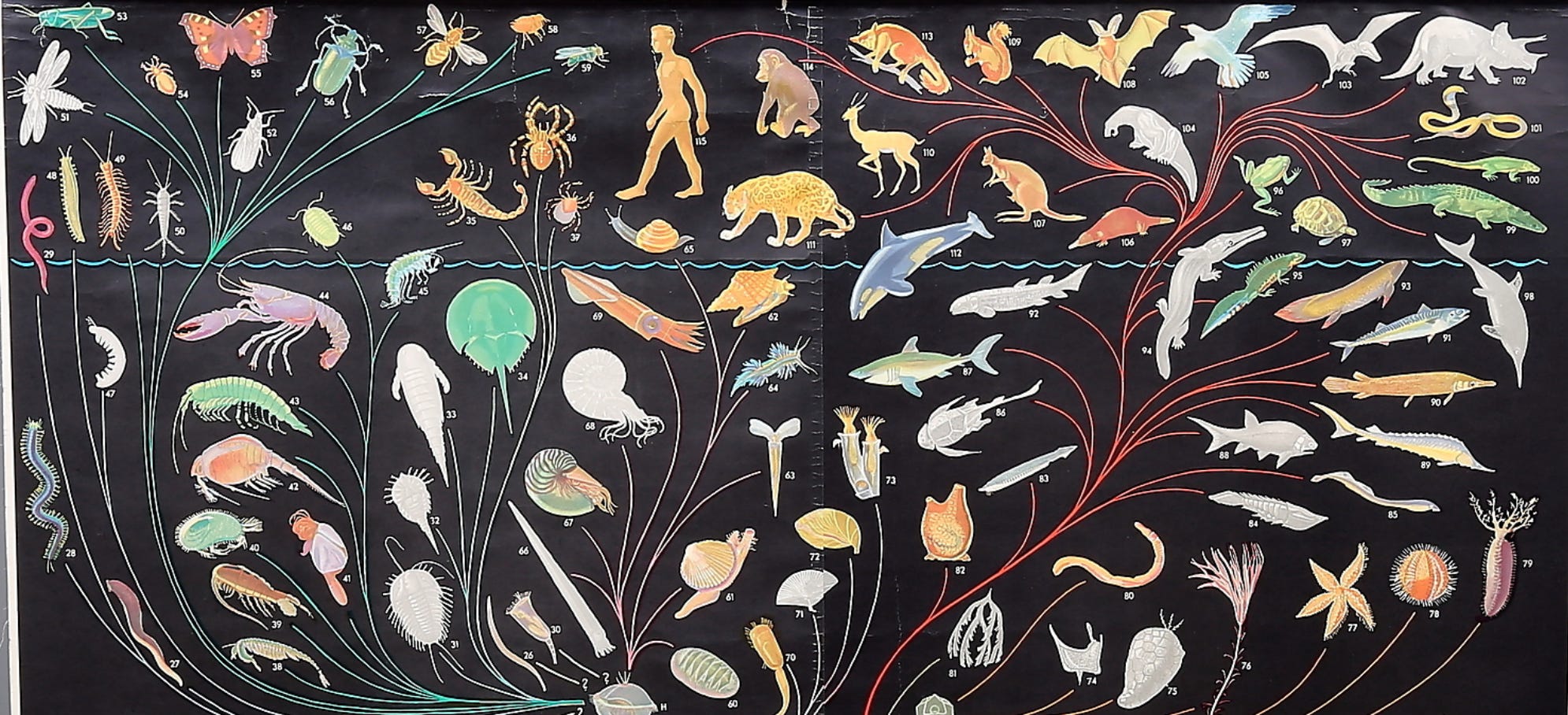
Science’s great breakthroughs have answered the same question. The telescope made us a speck in a corner of the cosmos. The microscope found a cosmos inside us. Darwin made us kin to everything alive, and nothing special. Each one gave us coordinates, a way to point at what we are and where we stand among groups larger and smaller than ourselves.
For a while DNA seemed like the final coordinate: a precise, recombinant blueprint for every living thing. It turns out the blueprint leaves out something important.
Michael Levin, a biologist at Tufts, works on bioelectricity, the voltage that cells hold across their membranes and use to signal one another. He started with the planarian, a flatworm that can be cut in pieces, each of which regrows into a complete animal. Something tells each piece what is missing and what to build. Levin found that much of that something is electrical. Change the pattern and you get a worm with two heads. Cut that worm, and its pieces keep growing two heads, though not one gene has changed.
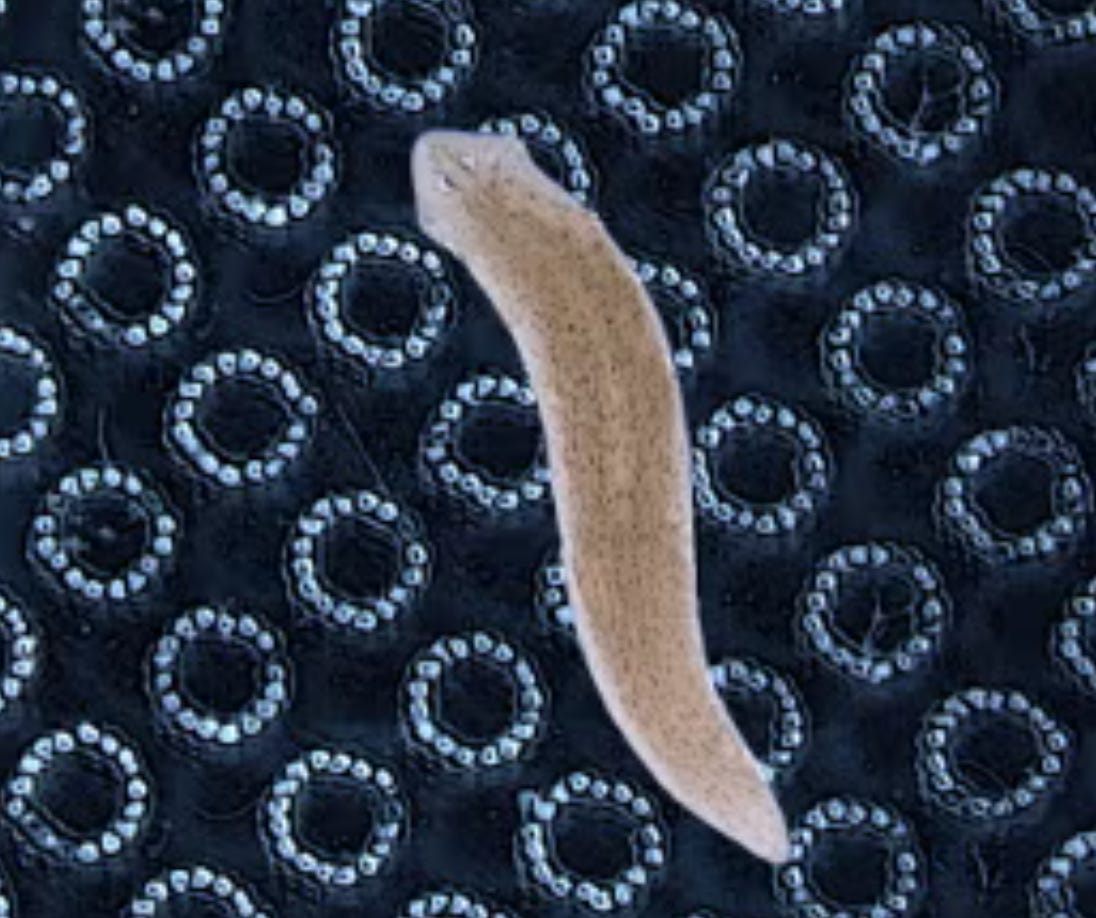
Where does the knowledge live? Only one half had the head. The answer seems to be that every cell, however specialized, can read signals about the shape of the whole. The electricity isn’t wise. It’s the medium the cells use to share what they know. Stranger still, worms trained to find food were decapitated, and the tails, which had no brain, regrew heads and remembered their training.
This is science doing what it should, each discovery making reality more wondrous than we thought. Levin’s worms carry the whole in every part, which echoes Indra’s Net from Buddhist and Hindu tradition: an infinite web of jewels, each one reflecting all the others. Planaria aren’t people. But in physics, biology and spirituality alike, the evidence keeps pointing to connections between us that run deeper than we guessed.
For the past two years I’ve been working on this with human groups, designing movements and trying new ways of connecting. In AA, Judaism, Fellow Travelers and the YES Movement what I’ve found surprised me. The groups that thrive are the ones that make room for vulnerability, and the ones where people give more than they take. That’s the mechanic underneath everything else: contribute something real of yourself, until your story and the group’s become hard to tell apart.
On Mondays I visit Princeton House to tell my story to the patients. When I started, I used to try to impress them, sensationalizing and spinning a tale of an entrepreneur’s fall. Now I do what I can to obscure the hero’s journey, it doesn’t really matter. I tell the story we all share, a kid who tried to do his best, growing up, overextending and making mistakes, falling and rising again. Simple, relatable and human.
The Lurianic Kabbalists tells this it as a story. At creation, the divine light poured into vessels too fragile to hold it. The vessels shattered, and sparks of that light scattered into everything. Nothing was lost. Every shard still carries some of the light.
Our job is to gather those sparks and raise them up, and in doing so to put the world back together.
Parts and the whole.
Those last few paragraphs are really beautiful 👏👏👏