
Resolving the Dogma Catastrophe
A story about names and the difference between "this" "that" and the "Other"

This is a story about the process of naming. More specifically, it’s about how the essential properties of language can polarize and trap us in roles defined by our differences and unmoored from our true indentity. It also explains how my own name became a clue in the mystery of who I am and helped me find peace.
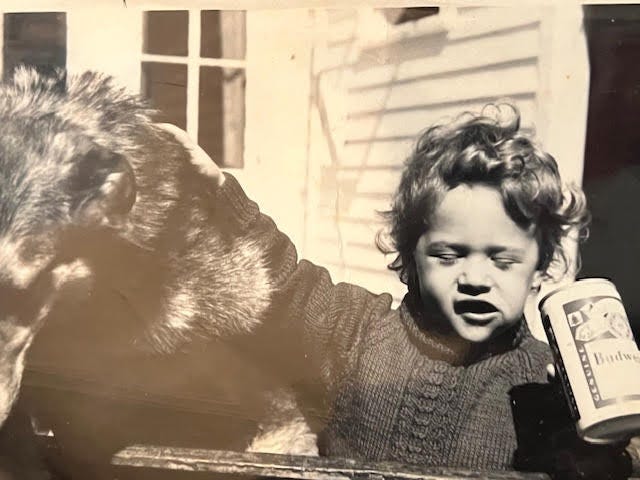
Like most stories, this one starts with family. Thirty years ago, my younger sister Nina wrote a play entitled “The Dogma Catastrophe”. I loved the name. On the surface, it concerned a cat and a mask. Her play was inspired by a famous psychological experiment.
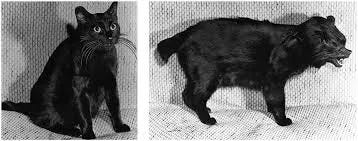
The cat pictured above is “Maynard”, the centerpiece of one of the most puzzling experiments in the history of cognitive psychology. In 1969, Dr. Rheta de Vries wrote a paper called “The Appearance-Reality Distinction and Perspective Taking with Masks”. She referred to an experiment in which she placed a dog mask on Maynard and asked children of various ages what sound such an animal would make. 3 year-olds answered “Woof”. By 6, all children agreed that “Meow” was the right answer. It’s a cute story but not as simple as it seems.
What does the experiment demonstrate? It’s not only about cats or dogs or how they feel about being dressed up in costumes. Of course, it’s about children and their cognitive development and ability to recognize creatures, using language to name them accurately. Getting it right requires understanding what linguists call the “essential nature” of a thing.
But that’s not why I’m still puzzled. Let’s ask the question from a different perspective. What might we call someone who believed a cat in a dog mask was an ACTUAL dog? Crazy? A Liar? Maybe just Wrong? A Storyteller? A Toddler? It’s a matter of context, perspective, identity and names. But it matters.
Before we get too deep with names, I’ll tell you how I got mine. My parents met in the late 1960’s in Australia, two foreign academics, studying math and anthropology. As part of the fieldwork for my mother’s PhD, they travelled together to Arnhem Land, a remote area of the Outback, where they lived with the local Aboriginal people while exploring the caves, rock art and cultural traditions of the continent’s earliest inhabitants.
Their host, guide and friend was a man named Wandjuk Marika, a leader in the Yolngu clan. In later years, he acted in and composed the score for Werner Herzog’s first movie, “Where the Green Ants Dream”, then became a famous painter and eventually mobilized his people to resist cultural appropriation of their languages and cultures. He was also a renowned Indigenous land rights activist and was awarded the title of OBE by the Queen. Upon his death, he was honored by his people with silence — the respect accorded was to not utter his name for a year.
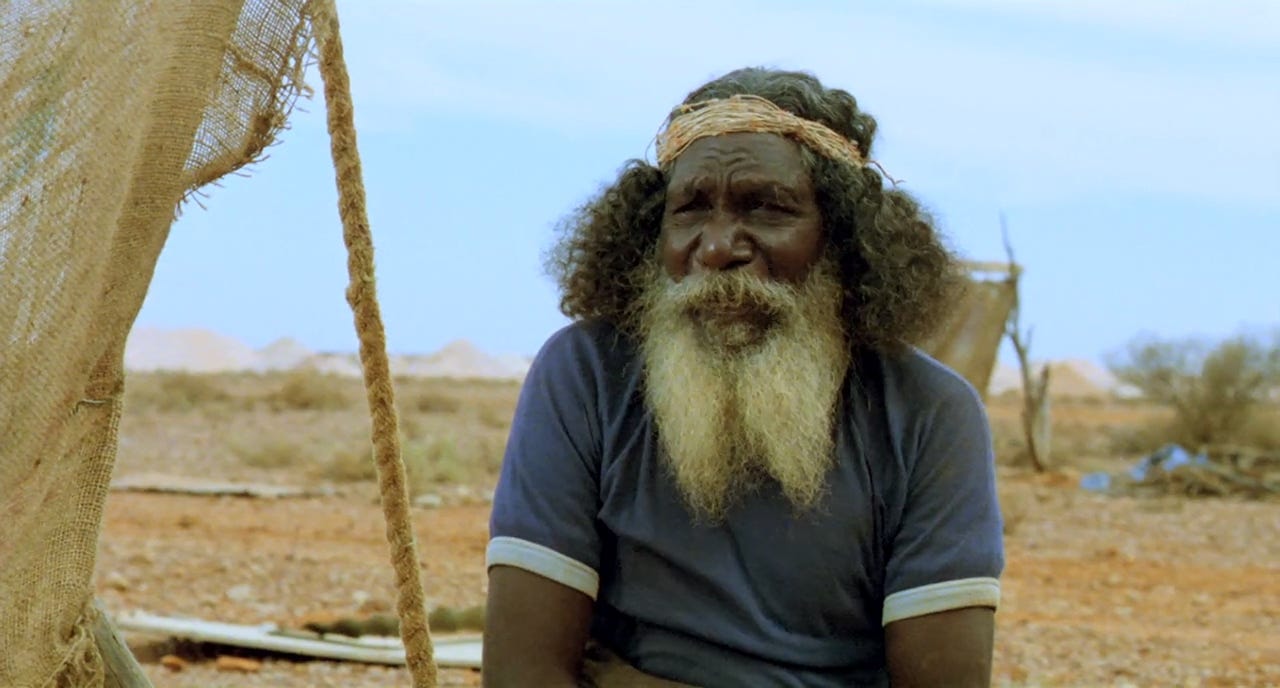
Wandjuk’s first act with my parents was to sort them each into one of the two ancestral clans of his Yirrkhala ancestors, a gesture of acceptance and friendship that gave them each a new name while mapping them into an ancient web of kinship, lineage and meaning.
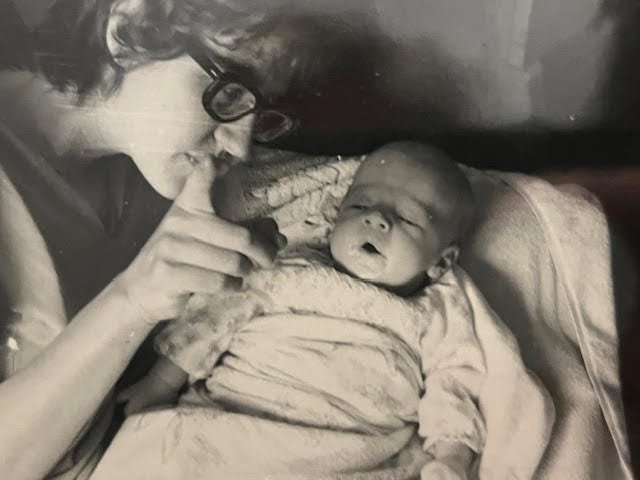
He and my father became very close. When my father would swim in the ocean, Wandjuk would stand on the nearby rocks with his spear and guard against sharks. At night under the stars, they shared their memories and dreams. When the time came for my folks to return to Sydney, he and my Dad performed a blood brother ceremony. A year later, I was born in Montreal. They named me Reuben Wandjuk Steiger.
So what does this have to do with Maynard the cat? To get to the cat, we have to follow a path laid by a wordsmith, the writer Zadie Smith. In her recent 2024 New Yorker piece, “Shibboleth: The Role of Words in Campus Protests”, Smith attempts to unravel the linguistic knot at the heart of the War in Israel/Gaza. She examines words, stories, ethnicities and politics to show use who we are, our inherited and acquired identities. Simply by how we name ourselves we unveil the morality and ethics of each of those decisions. To parse the essay, we need to use a strange and ancient word.
A Shibboleth is “any custom or tradition, usually a choice of phrasing or even a single word, that distinguishes one group of people from another”. The incident it refers to is from The Torah from Judges 12:4 Designed to discern hostile invaders, the Shibboleth was an actual word to describe which tribe of people could pronounce the word and which could not. They said “Sibboleth”.
The biblical punishment was swift and final as 42,000 lispers lost their lives. Words matter, pronunciation too. Tomato is not Tomaato. Other cultures have seemed to often agree.
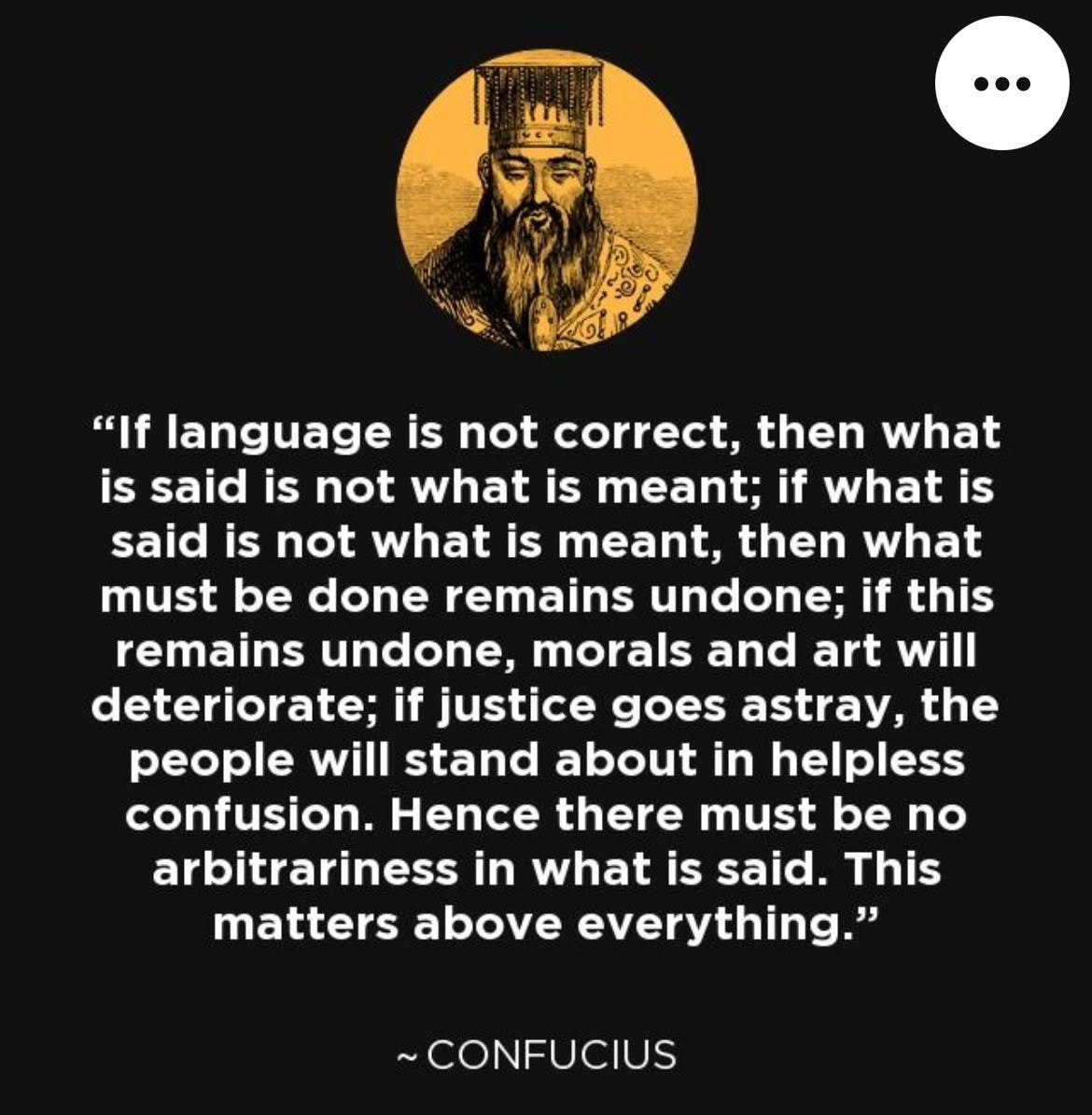
“Hamas” is a Shibboleth. So is “Palestinian”. And “Jew”. And “Zionist”, “Colonialist”, “Woman” “Mentally-Ill” “Alcoholic” and “Mother”. The list goes on and on. It even includes Pets and Children. Shibboleths are how we identify, quite literally, “This”, “That” and “The Other”.
Smith explains why Shibboleths surround us:
“To name something — to separate it from the rest of existence and bestow a label on it — is a foundational act. It is the beginning of understanding and control. In Genesis, the first thing God did after splitting light from darkness was to call the light “day” and the darkness “night”. After Adam was created and let loose in the Garden of Eden, his original job was label-maker. God brought him creatures to see what he would name them; and whatever man called each living thing, that was its name.”
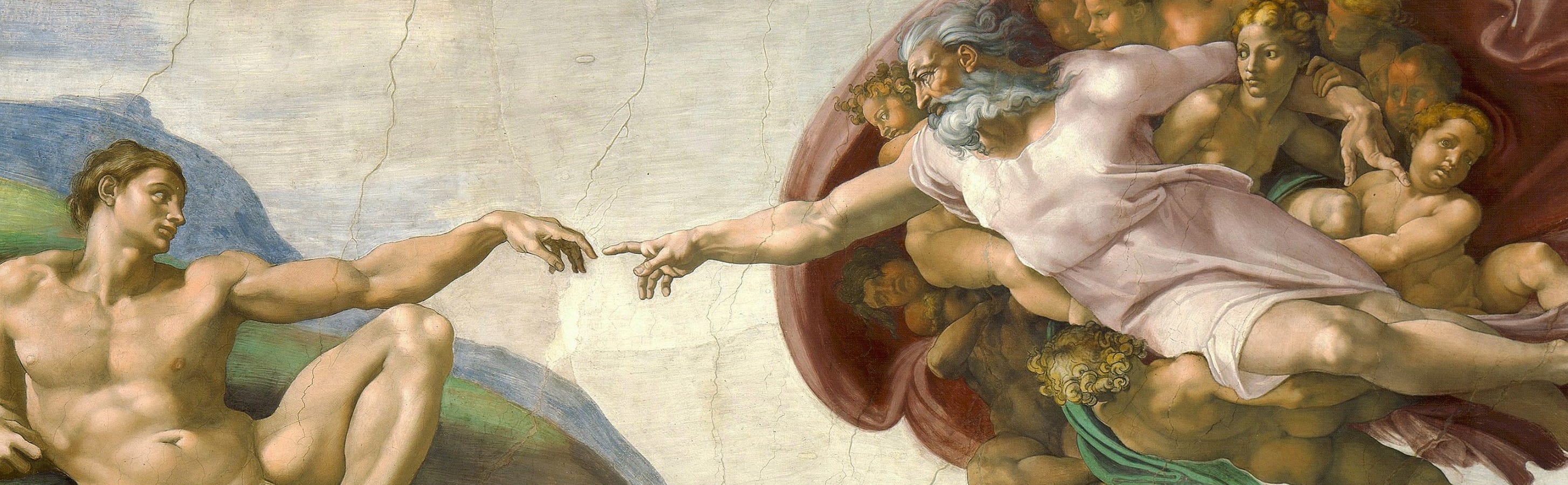
Smith tells us how words inform and create reality, describing our commonalities and differences, our births, names, friends, rivals, enemies and deaths. She struggles mightily before reaching her plaintive conclusion.
“We’ve arrived at the point at which I must state clearly “where I stand on the issue,” that is, which particular political settlement should, in my own, personal view, occur on the other side of a ceasefire. This is the point wherein—by my stating of a position—you are at once liberated into the simple pleasure of placing me firmly on one side or the other, putting me over there with those who lisp or those who don’t, with the Ephraimites, or with the people of Gilead.
Yes, this is the point at which I stake my rhetorical flag in that fantastical, linguistic, conceptual, unreal place—built with words—where rapes are minimized as needs be, and the definition of genocide quibbled over, where the killing of babies is denied, and the precision of drones glorified, where histories are reconsidered or rewritten or analogized or simply ignored, and “Jew” and “colonialist” are synonymous, and “Palestinian” and “terrorist” are synonymous, and language is your accomplice and alibi in all of it but “in the end these are just words and all that matters is death.”
Or is it? You can sense her powerlessness as a writer, insufficiently armed, battling for meaning in the face of meaningless tragedy. We’re clearly in dangerous territory here, and dear friends, this is the time for the obligatory trigger warning. My full disclaimer is that I have skin in the game and write only with love, as nothing more than a true Fellow Traveler or as they say in AA, just another bozo on the bus. Those who know me, know a bit about my story, my identity, weaknesses, affiliations, biases and blindspots. Like everyone, I contain multitudes.
Still with me? Good. OK, let’s examine how we got here. This essay is called “The Dogma Catastrophe”. It’s unsettling because of what it suggests about what Dr. Susan Gelman calls ” Essential Properties” or “Natural Laws”. Some people find such ideas uncomfortable. Gelman followed De Vries’ research with a study that explained children’s ability to identify and name things and link labels to objects’ true essence.
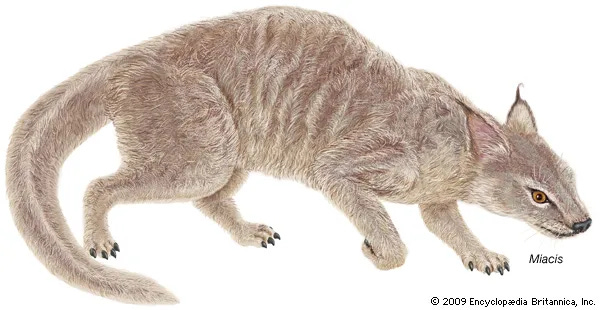
A cat is a cat. A dog is a dog. They’re similar but fundamentally different. For clarity, let me introduce you to their most recent common ancestor, the Miacid. It lived 55-60 million years ago. Was it a good pet? Was it loyal or crafty? Who knows? But it was neither a cat nor a dog. It was different. It was the “Other”.
This framework extends far beyond living things — gold, for example, is gold because it has the essential, atomically-dictated properties of gold. Sulfate is an invention with an alluring blue appearance but it’s human-created and mutable. It’s not just Sulfate, it’s the sum of it’s parts while gold is gold, regardless of time or space or the opinion of the observer. It’s gold, and that’s that.
What is the relationship of words to truth? Physics gives us a starting point. In his 1997 masterpiece, The Fabric of Reality the physicist and philosopher David Deutsch describes what he calls the four “strands” of “The Fabric of Reality”, the deepest explanatory theories we have to explain everything we know.
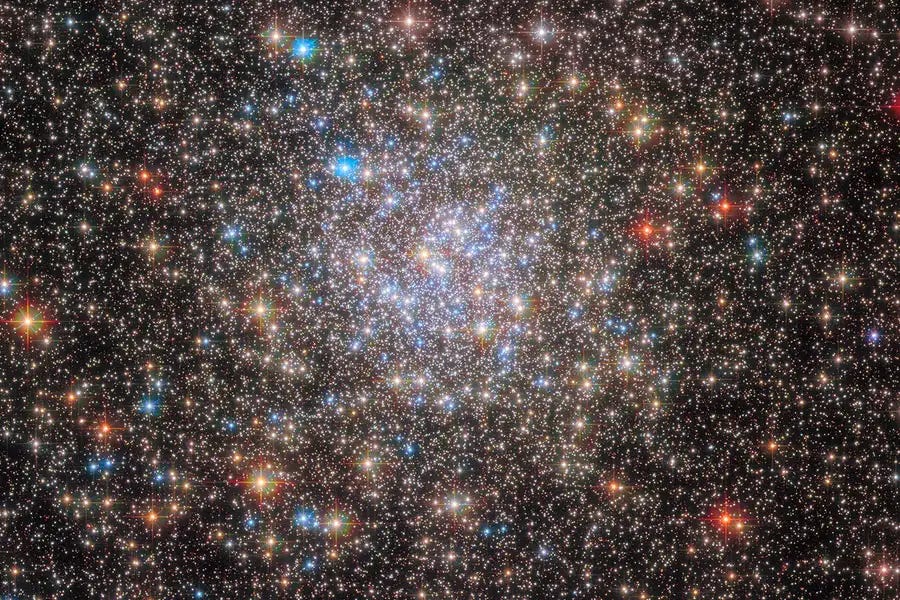
These strands are epistemology, quantum theory, computation and evolution. Follow any one far enough and you will connect with the others. Each one, just like the Dogma Catastrophe, makes claims on reality and truth, expressed differently perhaps, but reflective of an integrated whole. The Universe, everything past, present or future. What Wandjuk and my father saw at night-time in Australia in 1969 as they looked at the night sky, told tales of the past and dreamed of the future.
That’s the big picture. We’ve still got to deal with “Cat” and “Dog”. Do they reflect truth or create it? Well, both. In the language of semiotics, they are both signs and signifiers — in a magical sense, incantations and at the root level, elements in a periodic table of meaning, the ingredients for creating stories.
My friend Alexander Rose, former Director of the LongNOW Foundation, once called stories “the most powerful technology humans have ever created”. It’s a lofty claim when compared with the invention of agriculture, the scientific method, atomic energy or the discovery of DNA. But I agree with him. But language was not enough. It developed hundreds of thousands of years ago and is not uniquely human.
Some species of birds have words. Trees speak, with messages sent through mycelium networks and based on a syntax of cooperation. Language spent eons as a time-bound tool, uttered, understood and remembered but largely saved on our unreliable mental hard drives. Our ancestors traveled, adapted their words to suit changing needs of culture and geography, lived, died and forgot. But when they encoded letters in written words, suddenly our species unlocked the gates of time, letting us send messages to our future descendants. These were the original “Key” Words.
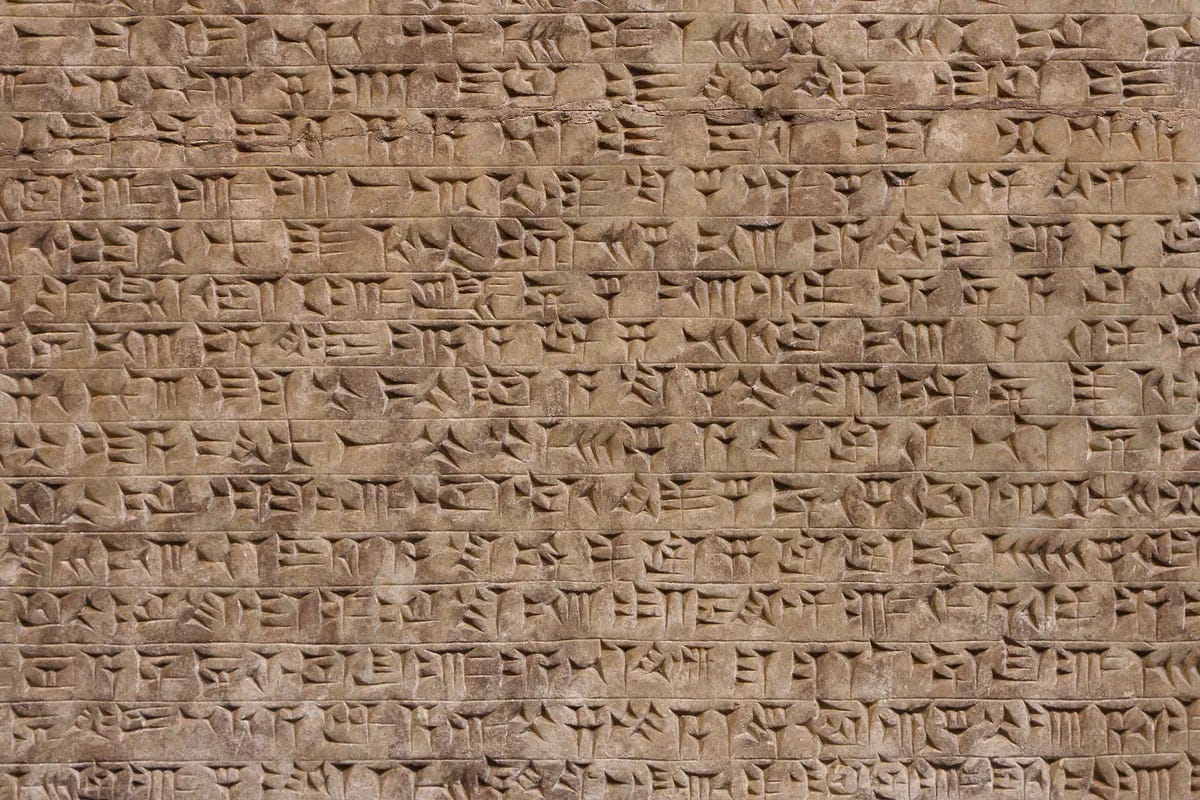
This is simple to understand as written words, traveling forward in time. The past is what confounds scientists who study evolution or consciousness— trying to trace where the words began. Philosopher Daniel Dennett writes:
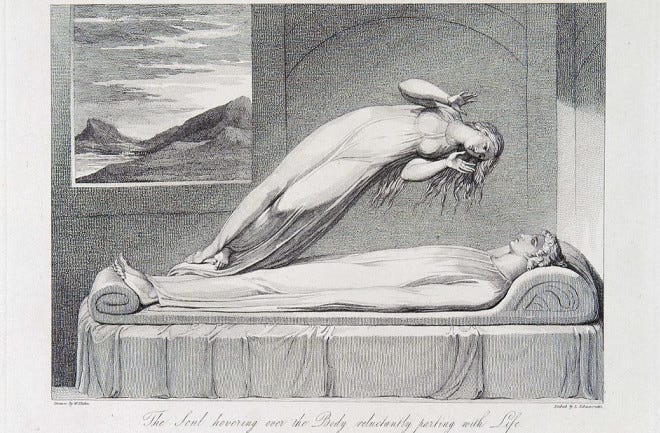
“Looking at information in the brain and then trying to trace it back to information in the genes that must be responsible for providing the design of the brain that can then carry information in other senses, you gradually begin to realize that this does tie in with Shannon's information theory. There’s a way of seeing information as "a difference that makes a difference,"
The problem is that information, perhaps like the soul, appears not to exist in the physical universe. Imagine two perfectly-accurate scales, side by side. On one, you place a hard-drive, full of all the words and photos ever created. On another, place a person. Neither erasing the hard-drive nor killing the person will change the weight displayed on the scale. So what happened?
My namesake Wandjuk painted his most famous piece when he was just 29. Entitled “Sea Life, Dreaming of the Artist’s Mother” it combines almost everything meaningful to him, as a son, father and ancestor. It depicts his “association with his mother’s Warramirri clan, and depicts a variety of marine species swimming over the field of miny’tji (sacred clan designs) representing the sea. The dots on the tentacles of the Portuguese man-of-war jellyfish represent its poison buds – the poison they emit is said to heat the water and calm the sea.”
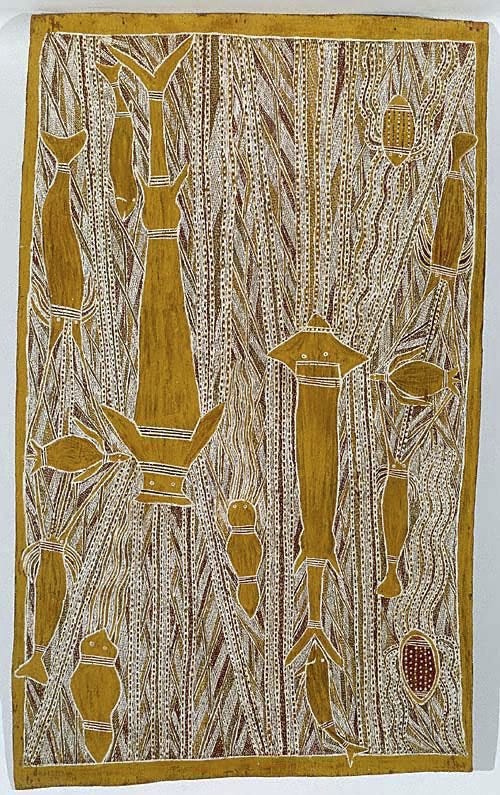
The twist to this story occurred a few years later when he walked into a tourist shop and saw an image of his painting reprinted on tea towels - his identity and art, both appropriated and for sale, without his permission or attribution. He vowed to never make art again. Yet somehow, he transformed the violation from anger to beauty, changed his mind, making more and greater pieces, two of which he gifted my parents. More importantly, he and his father used their ancestral work as a tool in the struggle for Aboriginal land rights resulting in new words and rewritten laws. He kept creating.
We now arrive at the point, the beginning of the end of this essay. What, you may ask, is “The Dreamtime” that Wandjuk was talking about? It is a concept both specific and universal, central to Aboriginal beliefs but one that differs from clan to clan, a word that has been mis-translated by Christian Missionaries and misunderstood by anthropologists and art historians alike. But it means something.
“Dreaming" is used as a term for a system of totemic symbols, so that an Aboriginal person may "own" a specific Dreaming, such as Kangaroo Dreaming, Shark Dreaming, Honey Ant Dreaming, Badger Dreaming, or any combination of Dreamings pertinent to their country. This is because in the Dreaming an individual's entire ancestry exists as one, culminating in the idea that all worldly knowledge is accumulated through one's ancestors. Many Aboriginal Australians also refer to the world-creation time as "Dreamtime"
As modern, Western people, we also have a Dreamtime. We just it call it by different names. Burning Man. The Metaverse. The Singularity. The Future. As techno-utopians we place our hopes and faith in our species getting exponentially smarter over time. The Aboriginals’ cosmology collapses time into older and wiser, an infinite future derived from the past, of shared dreams with their ancestors, earth and creator.

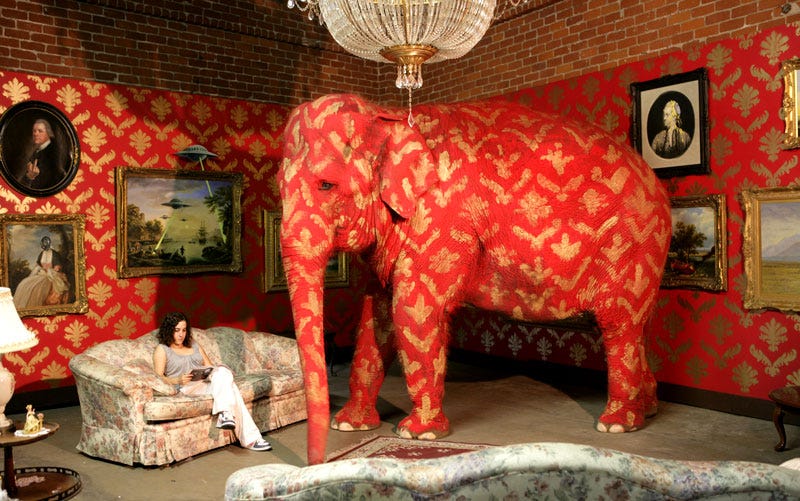
Back to the subject at hand. The Dogma Catastrophe describes both neutral and also inflammatory language. Polarizing subjects. Triggers. Or “The Actual Truth”. We sometimes refer to this “The Elephant in the Room” — the thing we avoid mentioning because it makes us uncomfortable.
But what if the actual truth is that we humans are all blind people describing the same elephant? What if in Heaven or The Afterlife or The Dreamtime, there aren’t separate rooms accessible only to those who can present the right Shibboleth at the door?
We live lives full of choices made by us and for us. And we largely agree that coercion is bad — forcing others to do things against their will. Yet we choose neither our parents, our names or our lineage, our inherited gifts or disabilities. We all have parents. We all have a common ancestor. And it’s not a bad guy or good guy — it’s little fellow, in fact, some 70 millions years ago. I’ll go out on a limb and name him. A lemur.
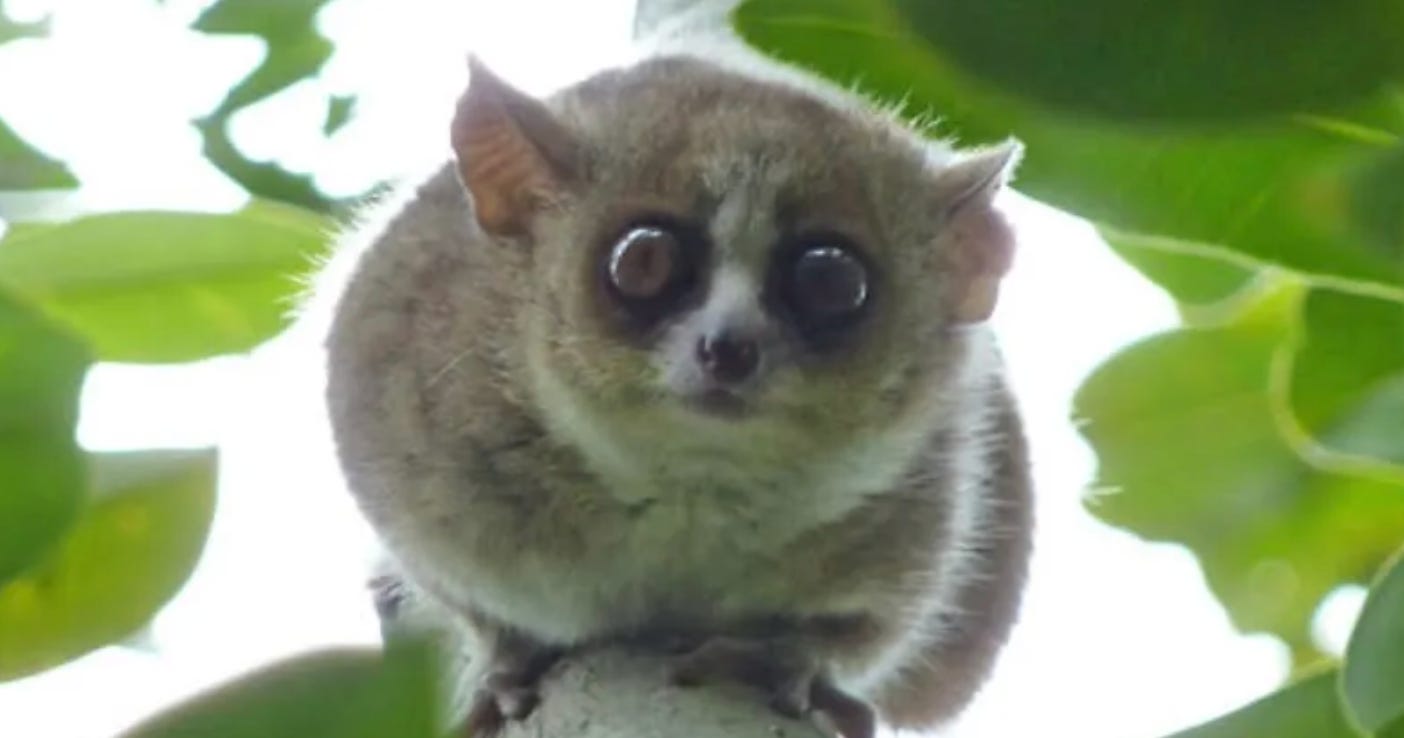
Most importantly, we were all children once. The hopeful angle of the Dogma Catastrophe comes from the perspective of the child, the recipient of life, the possessor of what makes us all connected. As we feed all words ever uttered into the great AI in the sky, as we donate and remix our DNA, let’s pause for a moment at the brink of the Hereafter.
The irony behind the great projects and tragedies that have been colonialism, racism, gender-wars and politics is that we all know that to desire to explore, seek novelty, compete and do battle has been intrinsic to the human experience to date. Sometimes we enact this need for polarities with words, sometimes with votes or violence. But are the opposites inherent in our identities and if so, is this a birthright or a death sentence?
Do we really need heroes and villains, good guys and bad girls, words as Shibboleths to sort out who did what to whom and why? Must someone always be to to blame? Mimetic Theory, the work of Stanford anthropologist Rene Girard suggests that it so. We are raised on mimetic desire, learn through difference and compete for status before resolving the conflict with a scapegoat and beginning again. At the heart of his theory lies imitation and envy of others.
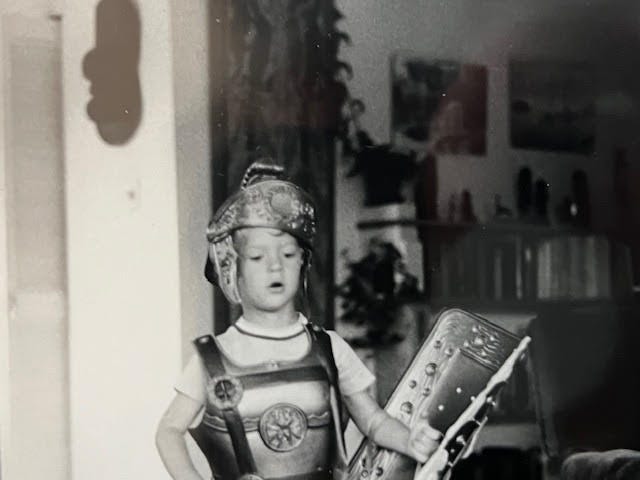
I play acted this type of drama as a kid, just as today’s kids do in Fortnite. In the distant future, once we’ve reached the furthest shores or planets, named the strangest animals and species we find there, maybe even mixed our DNA through blood, lust and love and moved on, perhaps we will arrive once again at the Dogma Catastrophe, confronting another cat named Maynard.
What might we learn from this little play, posing as a science experiment? The key is to realize what Susan Gelman’s research showed about the original experiment. She realized that the magic happened when the scientists forgot about Maynard and gave the dog mask to the children. At age 3, children put on the mask and believed they had become a dog. By 6, they gained knowledge a knowledge of inferring “Properties from Categories rather than Categories from Properties”. In other words, they knew they were playing make believe.
Is this lost innocence something for us to mourn, another sad truth of growing up?
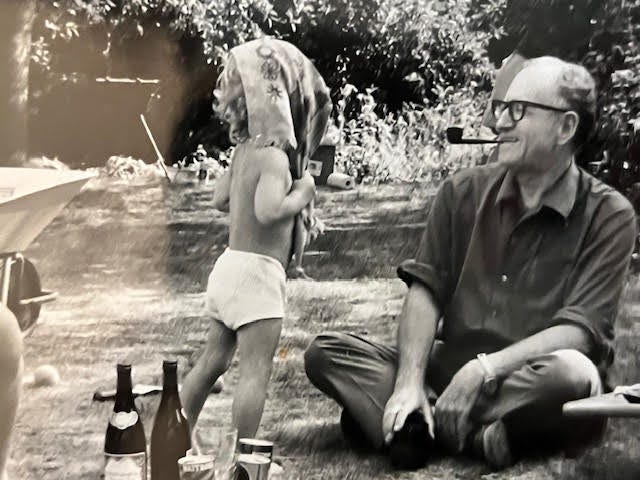
We are all both Insider and Outsiders — we dance through life putting on masks, playing roles, pretending one thing or another to impress people or just give us hope, bravery and whatever meaning it takes to get through the night. We put on these faces constantly, in our art and artifice, Facebook likes and social pretenses.
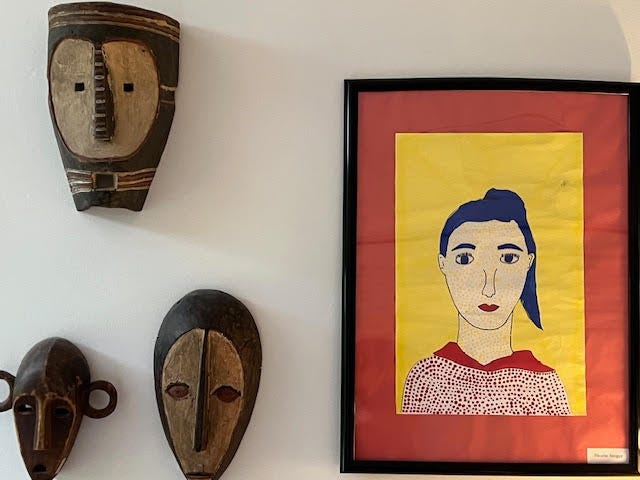
I’ve been humbled and inspired by Jim Carrey, one those amazing people whose life, talents and tragedies prove a greater point. Like Christopher Reeve, the paralyzed Superman or Steven Hawking, Godlike and trapped in a chair, Carrey burned brighter than most, his rubber face able to inhabit any character or role.
About a decade ago, he “Came Out”, sharing his affliction with terrible depression. His self-invented cure was poetic. He stopped “acting” — realizing that he was not the Mask or the star of the Truman Show, neither the Shibboleth or the role. He devoted his life to a single character, himself. It’s quite a difference.
Living out other peoples’ expectations condemns us to judgement, fear, shame and depression. We can also stop acting and start living our own heroic truth. It’s a choice. We are ourselves and that is a miracle. And it’s enough. The greatest mask is our own, the face we were born with, a fusion of childlike wonder and adult wisdom.
The Dogma Catastrophe is neither a tragedy nor comedy. It’s an instruction manual for escaping what seems like a labyrinth of mutually-exclusive truths that trap us in anger , striving to win zero-sum games of status or wealth. Life is all about identifying “this”, “that”, and the “other”, and getting to know who we really are.
I spent 52 years trapped in a version of the Dogma Catastrophe, searching for an answer. I didn’t find it in the libraries of the Ivy League, on Madison Avenue, or in Hollywood, in bars, Silicon Valley or at Burning Man, not in Second Life or Facebook or floating in the Dead Sea.
When the time came, I found my answer in humblest of places, in church basements filled with broken-down bums and billionaires, people of all religions sharing a single fatal disease. People exactly like me. Salvation came from surrender, from taking off the mask and saying my name and my disease, and telling my story over and over to strangers in a spirit of truth and trust. Hearing theirs, accepting help and helping others.
The big secret is that the message isn’t only for the sick or suffering. By removing the mask and speaking your truth, anyone can transform into what they were all along, perfectly unique and utterly common - a flawed masterpiece at the edge of being and nothingness. We are not our avatars. We are ourselves.
My message may be Dogma but it’s not a Catastrophe. In the end, it’s all about love. My parents knew that. So did Wandjuk. And of course, so did Maynard the cat.
So do you. Need a reminder? Just say your name.