

In 1925 a teacher in South Africa visited a cave and noticed a strange reddish Jasperite pebble. It has since become the most significant found object, named for the cave of its discovery - the Makapansgat Pebble. I will try to explain why it inspires me and sometimes keeps me up at night.
It looks like a face. Perhaps a person with a hat. This is important but only part of the story.
The pebble has been examined and deeply analyzed and it is devoid of cut marks. Nobody made it. One could almost dismiss it and move on. After all, nature is full of permutations, flowers that look like people and faces in the clouds.
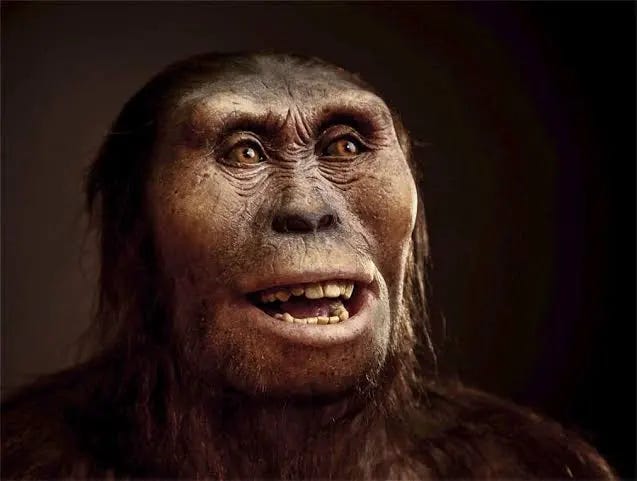
But the pebble was found in a cave, high over the valley and 20 miles from the stream bed of it’s origin. And it was found amongst the skeletons of pre-humans called Australopithecus, dating to between 2.5 and 2.9 million years ago.
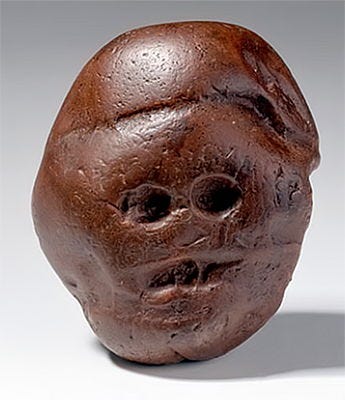
Now it becomes interesting. One of these creatures, it is believed, was walking far from home and saw a 8 cm pebble that tripped a switch and said “That looks familiar”. The recognition was so profound he picked it up and carried it 20 miles home to show to rest of his cave mates.
As modern human, we play with recognition liberally, with mirrors, masks and avatars. Sometimes we place babies in front of mirrors or even cats and dogs. Most of the time nobody knows what the subject really thinks upon seeing their reflection but the idea amuses and puzzles us. Tom Hanks in Castaway paints a volleyball and gives it a name and we love it - we give children dolls and action figures so they may feel transference and project themselves into play.
These days we think more about this in relation to AI. We’re obsessed with training the machine to transform words into images, images into worlds. AI’s consciousness is much on our minds. Will it wake up and become aware. What might be AI’s pebble and what would that vision and affinity mean? What does the machine think it looks like?
For me, the pebble is transcendent as I imagine someone being the first to see their resemblance in an object. Of course the original Australopithecus had likely never seen himself, making the story more magical. Perhaps he thought “that looks like the others”, grabbed it and walked briskly home to share the miracle.
The moment the cave’s purpose shifted from shelter to being a theater has always fascinated me. I like to think of the pebble as an early predecessor of later human caves, adorned with animals and hunters now able to create their own likenesses.
The presence of this pebble amidst the bones just widens my sense of mystery and wonder, a clue shaped by an unseen hand, placed for the right creature to recognize themselves and awaken.
